
Best Non GamStop Casinos – Top 10 Online Casinos UK 2026

The decision to leave UKGC-licensed online casinos rarely arrives in a single moment. For most UK punters it accumulates, through capped promotions and verification prompts that interrupt an ordinary session. By early 2026, enough of that friction had built up to push a visible share of regulars toward non GamStop casinos.
Two rule changes sharpened the contrast. A 10x wagering ceiling landed on every domestic promotion, and affordability reviews began surfacing during routine play rather than at high-stakes thresholds. The brands that gained were the ones already operating beyond that perimeter.
Each online casino below earned its place through hands-on testing, not a borrowed score from a review directory. We funded an account, claimed and cleared an offer, sat at a live table, and timed a withdrawal. The ranking reports what that sequence produced and nothing else.
Best Non GamStop Casinos UK 2026


































Best Non GamStop Casinos Ranked For UK Players In 2026
Ten UK online casinos cleared the final round, narrowed from a far larger starting pool. The filters stayed practical: whether the cashier honoured its quoted timeline, whether the terms survived a slow read, and whether the library justified a second visit.
Every brand on our list passed the same gauntlet we apply to non GamStop casinos before recommending them. The result of our testing is a credible shortlist of the best non-GamStop casinos for UK players today.
Promotions and sign-up offer details shift across the year, so confirm the live terms of any offer before depositing. That matters most when a specific bonus is the reason you picked the brand.
🎯 What we tested for:Testing focused on payout reliability, fair bonus terms, game library quality, and whether each casino delivered the experience its marketing promised. Usability, trustworthiness, and consistency across real-money sessions also played a major role in the final rankings.
| Operator | Our Score | Welcome Deal | Standout Strength |
|---|---|---|---|
| Ladbrokes | 4.9/5 | Bet £5, Get 100 Free Spins | Heritage Reliability |
| Paddy Power | 4.8/5 | 60 Spins, No Deposit Needed | Daily Promo Rotation |
| Sky Vegas | 4.7/5 | Deposit £10, Play With £40 | In-House Exclusive Slots |
| Betfair | 4.65/5 | £10 For 150 Wager-Free Spins | No-Wagering Winnings |
| Coral | 4.55/5 | 100% Up To £150 + 50 Spins | Live Dealer Range |
| Mr Rex Casino | 4.45/5 | 100% To £100 + 50 Spins | Mobile-First Build |
| Rizk Casino | 4.4/5 | 100% To £100 + Wheel Spin | Gamified Rewards |
| Magic Red Casino | 4.3/5 | 100% To £200 + 100 Spins | Studio Variety |
| Betmorph | 4.2/5 | £10 Becomes £30 | Sportsbook Crossover |
| Pub Casino | 4.05/5 | £20 Match On A £20 Deposit | British-Themed Slots |
In-Depth Reviews Of The Top 5 Non GamStop Casino Brands
The five write-ups below come from notes taken during testing, not from a script prepared in advance. Each opens on a single question: would the money have arrived on time when it counted.
Beyond payout reliability, the scoring weighs bonus value at its true cost and the small frustrations that only appear once the novelty fades. Those are the highest-scoring non GamStop casinos we tested, and the day-three details decided more than any launch-week headline.
1. Ladbrokes — A Heritage Name That Still Pays On Schedule

Trust was the first thing testing tried to break, and Ladbrokes held. Decades of operating history show up where it matters, in a cashier that behaves predictably under a real withdrawal request.
Bank transfers and debit cards settle on the timeline support quotes, with e-wallet requests clearing inside a day on verified accounts. There were no quiet holds or surprise document requests waiting at cashout, which is rarer than it should be.
The library runs past 1,400 titles, weighted toward mainstream houses like Pragmatic Play and Play’n GO rather than chasing a raw count. Evolution supplies the live floor, with a £5 qualifying spend that places it among the non GamStop casinos with £5 deposit entry points.
Where Ladbrokes lags is bonus generosity. The welcome spins look modest beside flashier rivals, and the VIP scheme rewards loyalty slowly rather than upfront.
- Long operating record backs a predictable, reliable cashier
- Bank transfer, card, and e-wallet payouts all settle on quoted timelines
- Single wallet links casino, sportsbook, and bingo under one login
- Evolution live floor includes every flagship game show
- Clean verification with no surprise holds at withdrawal
- Welcome spin allocation trails more aggressive rivals
- Loyalty rewards accrue slowly instead of landing early
- No cryptocurrency funding option at present
- RNG table range is thinner than the live selection
| Category | Score |
|---|---|
| 🎰 Slot Library | 4.6/5 |
| 🃏 Table Games | 4.5/5 |
| 🎥 Live Dealer | 4.8/5 |
| 🎁 Promotions | 4.4/5 |
| ⭐ Overall | 4.9/5 |
2. Paddy Power — The No-Deposit Offer Built For A Real Test Run
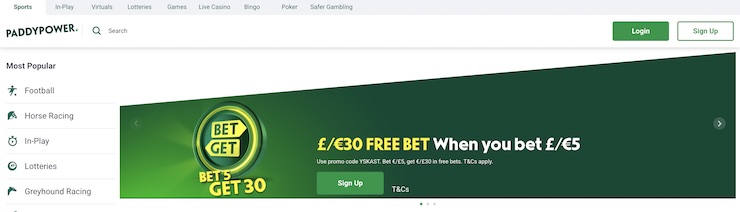
Few welcome offers double as a genuine audition. Paddy Power’s does: registration alone releases 60 spins on selected slots, with cash winnings payable after a single playthrough.
That structure ranks it among the rare non GamStop casinos no deposit bonus deals worth treating as reconnaissance rather than a giveaway. You can read the cashier and support quality before risking any of your own funds.
The promotional calendar refreshes daily rather than weekly, so frequent logins surface rotating offers that vanish overnight. Around 1,000 titles fill the library, tilted toward Playtech jackpot mechanics with posted drop deadlines.
Live play blends Evolution and Playtech rooms with Paddy-branded variants, and PayPal cashouts clear unusually fast where the method is offered. The comedy-led branding will not land for everyone, but the product underneath holds together.
- Sign-up alone activates 60 spins with no deposit required
- Promotions rotate daily, rewarding regular logins
- Playtech jackpots carry deadline-driven prize drops
- PayPal withdrawals clear quickly where supported
- One balance spans sportsbook, bingo, and casino
- A cap applies to winnings from the registration spins
- Library count sits below the larger catalogues here
- Deposit-bonus wagering can climb toward 35x
- Marketing tone divides opinion sharply
| Category | Score |
|---|---|
| 🎰 Slot Library | 4.5/5 |
| 🃏 Table Games | 4.6/5 |
| 🎥 Live Dealer | 4.7/5 |
| 🎁 Promotions | 4.9/5 |
| ⭐ Overall | 4.8/5 |
3. Sky Vegas — Exclusive Slots And A Polished Mobile Experience
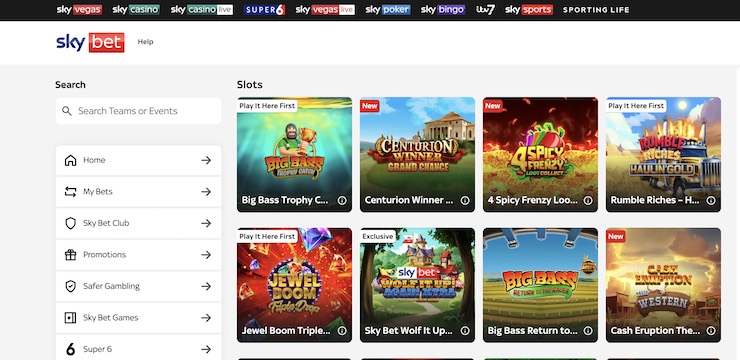
Sky Vegas earns attention for content you will not find elsewhere. A shelf of in-house exclusive slots and jackpot titles anchors the catalogue, and the mobile build renders them without the lag that trips up weaker apps.
The wider library clears 1,300 titles, with Pragmatic Play, Red Tiger, and Megaways releases filling the gaps around the exclusives. Deposits open at £10, keeping the threshold within reach of cautious first-timers.
Payout speed splits by method: Apple Pay and Trustly land same-day, while card withdrawals follow the parent group’s three-day cycle. A single verified identity unlocks Sky Bet and Sky Bingo alongside the casino.
The shortfall is RNG table depth, which trails the live offering for anyone who prefers solo blackjack to a dealer.
- In-house exclusive slots unavailable at rival brands
- Mobile experience is fast and genuinely well built
- £10 entry keeps the threshold approachable
- Apple Pay and Trustly support same-day cashouts
- One login covers Sky Bet and Sky Bingo
- Spin winnings carry their own wagering requirement
- No cryptocurrency rails on offer
- Card payouts sit on a slower three-day cycle
- Solo table range lags behind the live floor
| Category | Score |
|---|---|
| 🎰 Slot Library | 4.8/5 |
| 🃏 Table Games | 4.3/5 |
| 🎥 Live Dealer | 4.7/5 |
| 🎁 Promotions | 4.6/5 |
| ⭐ Overall | 4.7/5 |
4. Betfair — Wager-Free Spins That Behave Like Real Winnings
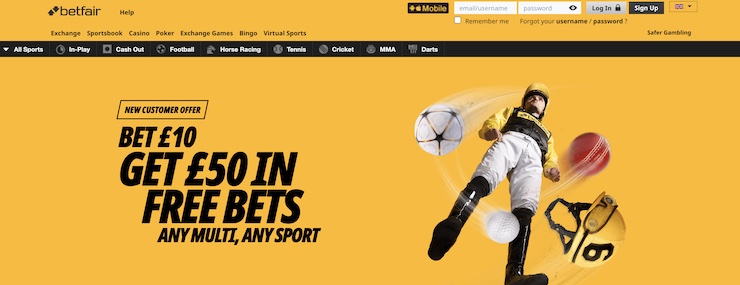
The headline deserves a second read before you deposit. A £10 outlay returns 150 spins with zero wagering, so winnings drop straight to the cash balance with no playthrough holding them hostage.
The library follows the same restraint, roughly 1,100 titles kept rather than thousands chased. Curation favours proven studios and a Playtech progressive that regularly crosses £6 million before it reseeds.
E-wallet withdrawals completed inside three hours during testing on verified accounts, among the fastest fiat speeds on this list. A daily free-entry prize draw pays cash up to £1,000 and offsets a thinner weekly calendar.
The deliberate curation will frustrate volume hunters who measure value by raw title count. For everyone else, the speed-and-quality pairing is hard to fault.
- 150 spins arrive with no wagering attached to winnings
- One account spans exchange, sportsbook, and casino
- E-wallet payouts cleared inside three hours in testing
- Progressive jackpot routinely tops £6 million
- Daily free draw pays cash prizes up to £1,000
- No matched deposit bonus on initial sign-up
- Weekly promotions run lighter than rivals
- Library is curated rather than maximised
- Support response times stretch during peak hours
| Category | Score |
|---|---|
| 🎰 Slot Library | 4.5/5 |
| 🃏 Table Games | 4.7/5 |
| 🎥 Live Dealer | 4.6/5 |
| 🎁 Promotions | 4.7/5 |
| ⭐ Overall | 4.65/5 |
5. Coral — A Live Dealer Floor With Loyalty That Compounds

Coral plays to the punter who treats live tables as the main event. The dealer floor spans roulette, blackjack, baccarat, and game shows across Evolution and Playtech rooms, with stake bands wide enough for both £1 sessions and high rollers.
The loyalty scheme is the quieter strength. Points accrue on every wager and convert into reload value and tier progression at once, rewarding players who concentrate their volume in one place.
Around 1,200 slots back the live offering, leaning on Playtech and Pragmatic Play standards. Debit cards and e-wallets handle banking, with e-wallet cashouts settling inside a day on cleared accounts.
Coral’s weak spot is its slot catalogue, which feels conservative beside the niche-studio depth found at the relaunched brands lower down this ranking.
- Broad live dealer floor across two major providers
- Loyalty points build reload value and tier status together
- Wide stake bands suit cautious and high-stakes players alike
- E-wallet withdrawals settle inside a day
- Shared wallet links casino and sportsbook
- Slot range feels conservative next to niche-studio rivals
- No cryptocurrency funding available
- Crash-game formats are absent from the lobby
- Welcome offer is solid but unspectacular
| Category | Score |
|---|---|
| 🎰 Slot Library | 4.3/5 |
| 🃏 Table Games | 4.7/5 |
| 🎥 Live Dealer | 4.8/5 |
| 🎁 Promotions | 4.5/5 |
| ⭐ Overall | 4.55/5 |
Side-By-Side Feature Comparison Of The Leading UK Online Casinos
Welcome headlines sell the click but predict almost nothing about long-term value. The columns below track what remains once the bonus has cleared, which is where the best UK non GamStop casinos actually separate from one another.
Treat it as a cross-reference for the reviews rather than a standalone verdict. The right combination of features beats any single strong column.
| Operator | Jackpot Network | Live Blackjack | Crash Titles | Tournaments | Welcome Deal |
|---|---|---|---|---|---|
| Ladbrokes | ✅ | ✅ | ❌ | ✅ | 100 FS For £5 |
| Paddy Power | ✅ | ✅ | ❌ | ✅ | 60 No-Deposit Spins |
| Sky Vegas | ✅ | ✅ | ❌ | ✅ | £10 Plays As £40 |
| Betfair | ✅ | ✅ | ❌ | ❌ | 150 Wager-Free Spins |
| Coral | ✅ | ✅ | ❌ | ✅ | 100% To £150 + 50 FS |
What Is Driving UK Players Toward Casinos Not On GamStop
The pull is not really about bigger numbers on a banner. Larger offers are a symptom of a regulatory divide, and the divide itself is the more useful thing to understand.
Domestic frameworks optimise for protection applied automatically; offshore frameworks leave more controls in the player’s hands. The four areas below are where that difference is felt during an ordinary session.
Cashier Options Domestic Sites Cannot Match
The widest gap sits at the cashier, not the game lobby. Credit cards have been blocked at UKGC sites since April 2020, while offshore brands still process them with a small surcharge.
Crypto widens it further, with Bitcoin, Ethereum, and USDT rails now standard offshore and Revolut support spreading quickly. That flexibility matters most at non GamStop paypal casinos, where players who cannot use PayPal want an equally private alternative.
Studios The Domestic Catalogue Quietly Dropped
UKGC content rules have tightened year on year, pulling crash games and several international suppliers off approved lists. The offshore catalogue keeps all of it, from Aviator and JetX through to Nolimit City and BGaming releases.
Players who exhausted the licensed catalogue feel this most. The difference now reads as a real library expansion rather than a handful of missing titles.
Bonuses Beyond The 10x Wagering Ceiling
The 2026 ceiling capped how far domestic promotions could stretch. Without it, offshore brands run larger match packages and heavier spin bundles.
Bigger does not automatically mean better, though. Wagering multipliers, max-bet caps, and withdrawal limits decide the real outcome, and only the full terms reveal them.
Controls That Remain With The Player
A few mechanics make offshore sessions feel different from the first spin. Bonus buy features survive offshore after being stripped from UKGC platforms, so feature rounds can be purchased instead of waited out.
Autoplay runs without the mandatory cooldown prompts domestic sites inserted, restoring the original spin pace. Parallel tables and self-set stake ceilings round out the picture for players who want to manage their own tempo.
The Trade-Offs Of Playing At Offshore Casino Brands
Flexibility is not free, and an honest guide says so plainly. The list below sets out what the UKGC framework provides and what disappears the moment you register at casinos not on GamStop, with no judgement about whether those losses matter for you.
- GamStop no longer reaches you. An active GamStop registration does not block sign-up or play offshore, so protection narrows to whatever each casino site offers on its own.
- Complaints follow a different route. IBAS handles UKGC disputes, while offshore brands answer to Malta, Gibraltar, Curaçao, or another authority, each with its own timeline and enforcement weight.
- Terms are not standardised. Two brands under the same licence can run very different wagering caps and expiry windows, and offers within one brand shift between promotions.
- Payout speed is inconsistent. Some cashiers clear in hours while others impose weekly ceilings or holds that only appear at the withdrawal screen.
- Anonymity is mostly a myth. Any reputable brand runs full KYC before paying out, so identity checks are unavoidable wherever you play.
How Bonuses Work At Non GamStop Online Casinos

Spotting a £200 match is easy; predicting whether it pays is the skill that matters. Bonuses at non GamStop casinos reward a slow reading of the terms, and this section breaks each one into the single lever that moves its real value most.
Treat every offer below as a template rather than a fixed deal. The pro tip after each names the variable worth checking before you commit.
Welcome Bonus
The first clause to find is the wagering scope: does the multiplier apply to the bonus alone or to deposit plus bonus. The combined version roughly doubles your required turnover and is often tucked into a sub-clause.
Standard structures match 100% to a ceiling, with wagering between 30x and 50x offshore. Breaching the per-spin cap during clearance usually voids both the bonus and any winnings it produced.
A subset of non GamStop casinos in the UK with £10 deposit tiers run smaller match percentages aimed at lower-stakes regulars. With a friendlier ratio, these can quietly outperform a larger headline offer.
Free Spins
The decisive split is wager-free versus wagered winnings. The former is a deliberate competitive move; the latter dresses a wagering requirement up as a freebie.
Spin value is the second lever. A 200-spin bundle at 10p and a 50-spin bundle at 50p both cap near £25, but attached wagering and slot variance make their realised returns diverge sharply.
No Deposit Bonus
Find the withdrawal cap before counting the spins. Ceilings of £50 to £100 on winnings set the real limit no matter how good a run goes.
The category has thinned without vanishing. A handful of non GamStop casinos no deposit offers run into 2026, usually £5 to £20 in credit or 15 to 50 spins, with a £2 max bet common during clearance.
Cashback
One question settles it: wager-free or wagered. A refund with playthrough attached is a partial rebate dressed as cashback, and the headline percentage overstates the truth.
Wager-free cashback at 10% to 20% of net losses across a cycle is the version worth chasing. It genuinely extends a bankroll in a way one-off welcome bonuses cannot.
Reload Bonus
Check the crypto angle first. At many non GamStop curacao casinos, reloads tied to BTC or USDT carry enhanced match rates or extra spins over the fiat version.
Reloads use smaller percentages than welcome offers because they target retention, not acquisition. The upside is cleaner terms, with shorter windows and lower playthrough being common.
Loyalty And VIP Tiers
The appeal is compounding. Each wager converts to points that feed redemption value and tier progress at the same time.
Higher tiers tend to lift withdrawal ceilings, add account management, and open reloads the base level never sees. Earning and redemption rates vary enough that identical play pays differently across brands.
Games On Offer At Non GamStop UK Casinos
Library make-up is where the offshore-domestic split becomes obvious to players. UKGC rules remove certain formats and studios outright, while offshore lobbies stock the international catalogue unfiltered.
The breakdown below pairs each format with its typical house edge and the variants worth scanning for in a new lobby.
| Game Type | Typical House Edge | Best For Players Who | Variants To Look For |
|---|---|---|---|
| Slots | 2% to 10% | Chase themes and jackpots | Megaways, Hold and Win, Cluster Pays |
| European Roulette | 2.70% | Like classic table play | Lightning, Double Ball, Immersive |
| Blackjack | 0.5% with strategy | Make optimal decisions | Infinite, Free Bet, Perfect Pairs |
| Baccarat | 1.06% on banker | Prefer fast round cycles | Speed, Squeeze, No Commission |
| Live Game Shows | Varies | Want a social table | Crazy Time, Monopoly Big Baller, Funky Time |
| Crash Games | Varies | Like rapid rounds | Aviator, JetX, Mines, Balloon |
| Poker | 2% to 5% | Value decision-led play | Casino Hold’em, Ultimate Texas, Three Card |
| Video Poker | 0.5% to 1% | Enjoy solo strategy | Jacks or Better, Deuces Wild, Joker Poker |
How To Register At A Non GamStop Casino Without Mistakes
Most accounts that stall at non GamStop casinos do so for avoidable reasons. The five steps below follow the standard sign-up flow, each framed around the friction point that catches new accounts.
Step 1: Choose The Operator, Then The Offer
The usual mistake is shortlisting by bonus size instead of operator reliability. A headline figure is marketing; what counts is whether the cashier releases winnings on time once the bonus clears.
Build your shortlist from a tested set like the one above, and let the offer break a tie between two equally solid brands rather than decide on its own.
Step 2: Match Your Details To Your ID Exactly
Mismatches between the form and your ID are the leading cause of held cashouts. Compliance flags any inconsistency, and a missing middle initial or a slightly different address format can stall a payout for days.
If an offer needs a bonus code, enter it during registration. UK online casinos rarely apply codes after the fact, and the support fix almost never works.
Step 3: Open The Verification Email Quickly
Verification links often expire within 24 hours and tend to land in spam. Checking both inboxes straight after sign-up avoids returning to a dead link and a dormant account.
That same email frequently releases any no-deposit reward, so a missed link delays the bonus too.
Step 4: Submit KYC Before Your First Deposit
The single highest-value setup move is uploading documents before depositing, not at your first withdrawal. The usual set includes:
- A government photo ID such as a passport or driving licence
- Proof of address issued within the last three months
- Occasionally a screenshot confirming your deposit method
Reviews take 24 to 72 hours whenever they arrive. Submitting early means your first withdrawal hits a verified account instead of a queue.
Step 5: Hit The Qualifying Deposit Precisely
Welcome offers set a minimum deposit, and falling short by a single pound voids the bonus under most terms. Deposit the stated figure or more, not the round number that feels close.
Spins and bonus credit usually post within minutes of the deposit clearing. If they do not, open a ticket immediately rather than waiting it out.
Spotting Safe Non GamStop Casinos Before You Deposit
Without the UKGC baseline doing the filtering, judging trust at non GamStop casinos becomes a deliberate task. The five checks below run from the most technically conclusive to the most socially telling, the reverse of how many guides order them.
- Verify the licence first. Take the number from the footer and run it through the regulator’s public registry. If the legal name returns no match, the licence is decorative and nothing else matters.
- Check RNG certification next. A seal from eCOGRA, iTech Labs, or GLI shows an outside lab validated the RTPs and randomness. No seal means the fairness claims rest on the operator’s word alone.
- Read the bonus terms cold. Four variables decide payout: wagering multiplier, game contribution, max bet during clearance, and expiry. All four belong on the promotion page, and terms scattered across nested documents are scattered deliberately.
- Run a small payout trial. Deposit the minimum, clear terms briefly, and request a withdrawal. The cashier’s behaviour under a real request is the strongest signal available.
- Look for patterns in player feedback. AskGamblers, Casino Guru, and Trustpilot threads from the past year expose recurring issues. Weigh repeated complaints, not isolated ones.
Offshore Casinos Versus UKGC-Licensed Sites Compared
The choice between non GamStop casinos and UKGC sites is not safe versus risky; it is a pick between two regulatory products with different cost-benefit profiles. UKGC licensing buys protection and standardisation at the expense of bonus size and content.
Offshore licensing buys flexibility and breadth at the expense of standardised safeguards. The grid below shows where the trade lands hardest.
💡 Worth knowing: Non GamStop casinos typically offer larger bonuses, broader game libraries, and more flexible payment methods than UKGC sites. The trade-off is lighter consumer protection, with fewer standardised safeguards and stricter responsibility placed on the player
| Feature | Offshore (Non GamStop) | UKGC-Licensed |
|---|---|---|
| Wagering Cap | Often 30x or higher | Capped at 10x since Jan 2026 |
| Welcome Package | Can exceed £2,000 | Compressed by the 10x rule |
| Crypto Deposits | Commonly accepted | Almost never available |
| Credit Card Deposits | Allowed with a surcharge | Banned since April 2020 |
| Library Range | Broader, international studios included | Approved suppliers only |
| Verification | Standard and streamlined | Strict, plus affordability checks |
Payment Options At Non GamStop Casino Sites
Banking is where non GamStop casinos diverge most from domestic brands. The methods below run roughly fastest to slowest on payout, the dimension most players come to care about once they have used a cashier twice.
| Method | Min Deposit | Withdrawal Limit | Payout Window | Fees |
|---|---|---|---|---|
| Cryptocurrency | £10 | No set cap | Under 24 hours | Network gas only |
| E-Wallets | £10 | £5,000 | Under 24 hours | None |
| Debit Card | £10 | £10,000 | 1 to 3 working days | None |
| Credit Card | £10 | £5,000 | 2 to 4 working days | 1% to 3% |
| Bank Transfer | £20 | £20,000 | 3 to 5 working days | Up to £15 |
Cryptocurrency
The speed edge here is not incremental, it is an order of magnitude. Verified withdrawals often complete within the hour at top crypto casinos, with only network gas to pay.
USDT removes the volatility that comes with native coins, holding value steady between request and arrival. Casino sites frequently attach reload offers to crypto deposits, layering value on top of the speed.
Best for:
Speed-focused players, anyone isolating gambling from their bank, and reward hunters chasing crypto-specific offers.
E-Wallets
Skrill and Neteller sit in the same speed bracket as crypto without any crypto exposure. Withdrawals usually clear inside a day, and bank details never reach the casino site.
PayPal is the exception in this group. Its compliance stance limits availability across online casinos in the UK, but the brands that do support it tend to clear it faster than any other fiat route.
Best for:
Fast-payout priorities, players who would rather not share bank details, and anyone with an e-wallet balance to recycle.
Debit Cards
Visa and Mastercard debit remain the default for a first deposit. Funds land instantly with no fee, and familiar fraud protection adds reassurance newer rails lack.
The catch is the withdrawal pace. Card cashouts run one to three working days, fine for the unhurried but slow for anyone watching the clock.
Best for:
First deposits, players who value familiar fraud cover, and low-stakes regulars not chasing speed.
Credit Cards
Credit deposits are the oddity here. Banned at UKGC sites since April 2020, they survive offshore with a 1% to 3% fee on top.
Funding play with borrowed money is exactly why the UK blocked them domestically. Firm self-set deposit caps are the only sensible approach if this rail is used at all.
Best for:
Players deliberately ring-fencing gambling from a main account, and reward-card users with strict limits.
Bank Transfer
Bank transfers are the slow lane with the highest ceilings. Settlement runs three to five business days, with operator fees that can reach £15 each way.
Their role is specific: moving sums above the limits cards and e-wallets enforce. For routine cashouts, everything else here is faster.
Best for:
High-stakes players shifting large balances, and anyone without a crypto or e-wallet setup.
Revolut
Revolut adoption is rising at newer brands because it pairs instant deposits with same-day GBP withdrawals at no user fee. Its real-time spending panel doubles as an informal session tracker.
One setting matters: the gambling merchant block. Where it has ever been switched on, deposits fail silently rather than flagging an error, and the toggle lives in the app’s card security menu.
Best for:
Existing Revolut users, and anyone wanting live visibility over their gambling spend.
New Non GamStop Casinos To Watch This Year
The brand new non GamStop casinos arriving in 2026 follow a different blueprint from the legacy names. Mobile-first builds and open-banking verification are standard now rather than premium extras, and bonuses increasingly mirror the 10x benchmark domestic rivals must follow.
For players who have already worked through the established lobbies, these new online casinos often ship banking and mechanics the older brands have yet to adopt.
| Casino | Launched | Operator | Licence No. | Known For |
|---|---|---|---|---|
| Mr Rex | 2021 | ProgressPlay | 39335 | Mobile-first, 2,500+ games |
| Pub Casino | 2023 | ProgressPlay | 39335 | British-themed slots |
| Rizk Casino | 2023 (relaunch) | Zecure Gaming | 56427 | Wheel of Rizk rewards |
| Magic Red Casino | 2023 (relaunch) | AG Communications | 39483 | 2,000+ slot library |
| SpinYoo | 2021 | Yellow Day Marketing | 52894 | 4,000+ slots, daily spins |
| Betmorph | 2021 | ProgressPlay | 39335 | Casino and sportsbook hybrid |
The Regulators That License Non GamStop UK Casinos
A “licensed and regulated” badge means very different things depending on who issued it. The regulators behind non GamStop casinos each run their own enforcement model, capital requirement, and dispute path, and the gap between strictest and loosest is wide.
The number in any footer can be cross-checked against the regulator’s public registry in under a minute. It is the cheapest verification step there is, and skipping it is the most common new-account mistake.
- Malta Gaming Authority (MGA): The strictest of the major offshore frameworks. Player funds must be ring-fenced, RNG audits are scheduled, and enforcement decisions are published, building a record other regulators lack.
- Gibraltar Regulatory Authority: The post-Brexit base for many established UK brands. Capital thresholds are high, and escalated disputes route into Gibraltar’s own small-claims framework.
- Isle of Man GSC: Lower licensee volume but tough on capitalisation and technical certification. Most holders are long-running online casinos, and payout reliability tracks accordingly.
- Curaçao eGaming: The broadest umbrella and the hardest to read as a group. Some licensees run cleanly for years while others vanish mid-dispute, so treat the licence as the start of due diligence and weight recent feedback heavily.
How Verification Works At Trusted Non GamStop Casinos
A persistent myth says offshore licensing means optional KYC. The reverse holds: any brand skipping verification at withdrawal is signalling shortcuts that resurface later as withheld winnings.
Standard checks at a reputable casino site confirm identity, age, and source of funds through photo ID, recent proof of address, and sometimes a deposit-method screenshot. Reviews run 24 to 72 hours by queue depth, which is exactly why front-loading documents at registration pays off.
The phrase to distrust is “instant withdrawals, no verification.” It usually means the compliance conversation has been deferred to the moment a big win triggers it, turning the missing checks into a tool for long holds rather than a perk.
What Privacy Really Means At Offshore Casino Platforms
The privacy picture offshore is subtler than the marketing implies. KYC still runs, so the operator knows who you are; what changes is the wider data network the operator sits inside.
UKGC platforms feed affordability infrastructure and centralised data-sharing that does not extend offshore. So offshore activity generates less downstream visibility into related domestic systems, and that reduced footprint is the real benefit, not anonymity.
Payment choice decides how much of that benefit survives. Crypto offers the strongest financial isolation, e-wallets keep bank details off the operator’s books, and cards leave the clearest trail on a statement.
Any brand worth using runs 256-bit SSL on data in transit, and its privacy policy should spell out what is kept, for how long, and who else sees it.
The Game Studios Powering Top Non GamStop Casinos

An operator’s studio list reads catalogue quality faster than any title count. The studios stocked by the top non GamStop casinos matter more than raw numbers, and a 4,000-game library built on third-tier developers is worth less than a 1,500-game one drawn from the eight names below.
These providers fall into three rough tiers: the live-dealer monopoly, the mainstream slot houses, and the high-volatility specialists UKGC rules tend to exclude.
| Studio | Strongest At | Signature Titles |
|---|---|---|
| Evolution Gaming | Live tables and game shows | Crazy Coin Flip, Mega Ball, Cash or Crash |
| Pragmatic Play | High-volume slots and live | Wolf Gold, The Dog House, Sweet Bonanza |
| Nolimit City | High-volatility slot design | Punk Rocker, Deadwood, Mental |
| Hacksaw Gaming | Bonus buys and scratch formats | Cubes 2, RIP City, Wanted Dead or a Wild |
| Play’n GO | Slots with table content | Book of Dead, Reactoonz, Moon Princess |
| NetEnt | Classic and video slots | Starburst, Gonzo’s Quest, Divine Fortune |
| BGaming | Crash games and crypto-ready slots | Elvis Frog in Vegas, Wild Cash, Aztec Magic |
| Spribe | Crash-style mechanics | Aviator, Mines, Plinko |
Casino And Sportsbook Hybrids Among The Best Brands
The strongest non GamStop casinos rarely stop at slots and tables. The strongest betting sites not on GamStop rarely stop at slots and tables. Most pair a real sportsbook with the casino behind one verified login.
This section covers what marks a genuine sportsbook from a token add-on, and where coverage varies most between brands.
Sport-By-Sport Coverage Across The Leading Books
Market depth varies more between betting sites than the menus suggest. The table ranks coverage on breadth tested during evaluation, naming the strongest brand per sport.
| Sport | Market Depth | In-Play | Live Stream | Best Operator |
|---|---|---|---|---|
| Football | Elite | ✅ | ✅ | Paddy Power |
| Horse Racing | Elite | ✅ | ✅ | Ladbrokes |
| Tennis | High | ✅ | ✅ | Sky Vegas |
| Basketball (NBA) | High | ✅ | ❌ | Betfair |
| American Football | Medium | ✅ | ❌ | Sky Vegas |
| Cricket | High | ✅ | ✅ | Coral |
| Golf | Medium | ❌ | ❌ | Paddy Power |
| Darts | High | ✅ | ❌ | Ladbrokes |
| Snooker | High | ✅ | ❌ | Coral |
| Esports | Medium | ✅ | ❌ | Betfair |
| Boxing / MMA | Medium | ✅ | ❌ | Paddy Power |
| Rugby Union / League | High | ✅ | ✅ | Sky Vegas |
What Separates A Serious Book From The Rest
Cash-out reliability sorts credible books from the rest faster than any other metric. Engines that pull the feature mid-event, freeze it at the worst moment, or fail to lock an accepted price are more common than the branding admits.
In-play performance is the next quick tell. Latency and suspension both degrade under load, so a quiet Tuesday fixture proves nothing; stress-test a Saturday Premier League kick-off instead.
Odds quality counts most where you stake real volume. Top-flight football margins are tight everywhere, but second-tier football, niche tennis, and outright markets can run 5% to 10% out of line between brands. Recurring offers like acca insurance deliver more long-run value than one-off free bets.
Funding flexibility is the last differentiator worth weighing: the crypto sports betting sites in this group settle bets to a wallet balance, so winnings clear on the same sub-hour timeline the casino cashier does
Best Odds Guaranteed And Racing Streams
Racing erases the offshore-domestic line more than any other product, because the sport’s own rules set the frame, not the regulator. Paddy Power applies Best Odds Guaranteed across UK and Irish fixtures for win singles, paying the better of taken price and starting price.
Streaming is the underrated differentiator. Ladbrokes, Paddy Power, and Sky Vegas all stream UK and Irish meetings to account holders with a funded balance or a qualifying bet, at broadcast-grade quality rather than the low-bitrate feeds of weaker brands.
Festival place terms across Cheltenham, Royal Ascot, and Aintree held up across the tested brands. Enhanced each-way fractions on big-field handicaps often beat exchange equivalents once commission is counted.
Choosing The Best Online Casinos Not On GamStop
The five principles below run from cheapest experiment to most involved analysis. Worked in order, each one either trims the shortlist or feeds the next step.
-
- Run a minimum-deposit payout trial. Fund at the lowest qualifying amount, clear terms briefly, and request a withdrawal. Only the cashier’s real behaviour tells you what a serious balance will face.
- Cross-check the licence number. Pull the ID from the footer and run it through the regulator’s database. A return from MGA, Gibraltar, or the Isle of Man GSC weighs more than a Curaçao result on trust grounds.
- Cost out every bonus. Multiply wagering by bonus amount, apply contribution rates, and factor in max-bet caps and expiry. A 20x bonus on a 96% RTP slot costs less than a 35x bonus on a 92% slot, every time.
- Read feedback for patterns. Year-old threads on AskGamblers, Trustpilot, and Casino Guru surface recurring problems. Repeated reports of withheld winnings are signal; one-offs are noise.
- Match strengths to your play. A slot-heavy brand wastes a roulette regular, and a curated lobby frustrates a volume hunter. Use the reviews above to line up an operator’s strengths with how you actually play.
Staying In Control: Responsible Gambling Tools
The structural change offshore is that GamStop does not reach these brands, so the centralised self-exclusion many UK players assume is active simply is not. Responsible play at non GamStop casinos is more deliberate as a result, though no harder.
Three operator-level tools carry most of the load, and the better brands build all three into the dashboard rather than the support menu. Deposit limits cap funding per period, loss limits cap realised damage per session, and account-level self-exclusion removes access for a set window at that brand.
The decisions that matter happen before the first spin, not during it. Fix three numbers in advance and treat them as binding: a maximum spend, a loss cap that forces a stop, and a time limit on the session.
The signal to walk away is when chasing replaces enjoying, when spend runs past the plan, or when play stops feeling like a leisure choice. If you need support, the organisations below are confidential and free:
- BeGambleAware: A 24/7 confidential UK helpline with written resources for players and affected families.
- GamCare: Free one-to-one counselling, peer support groups, and a national helpline.
- Gambling Therapy: Chat-based emotional support for players and families worldwide.
- NHS Gambling Support: Specialist clinical treatment via GP referral or self-referral.
- Gamblers Anonymous UK: Peer recovery meetings in person and online across the UK.
Final Verdict On Choosing A Non GamStop Casino
The right pick among non GamStop casinos is not the one with the biggest banner or the deepest shelf; it is the one whose strengths fit how you actually play. Whether that is payout speed, content range, sportsbook depth, or banking flexibility, every online casino UK players reviewed above carries a distinct profile to weigh against your own priorities.
Before you deposit, verify the licence, file KYC at registration rather than at cashout, and read the bonus terms as carefully as you would a financial product. Set your spending limits first, hold them across later sessions, and reach for the organisations above the moment a session stops feeling like time well spent.